A trip down memory lane…

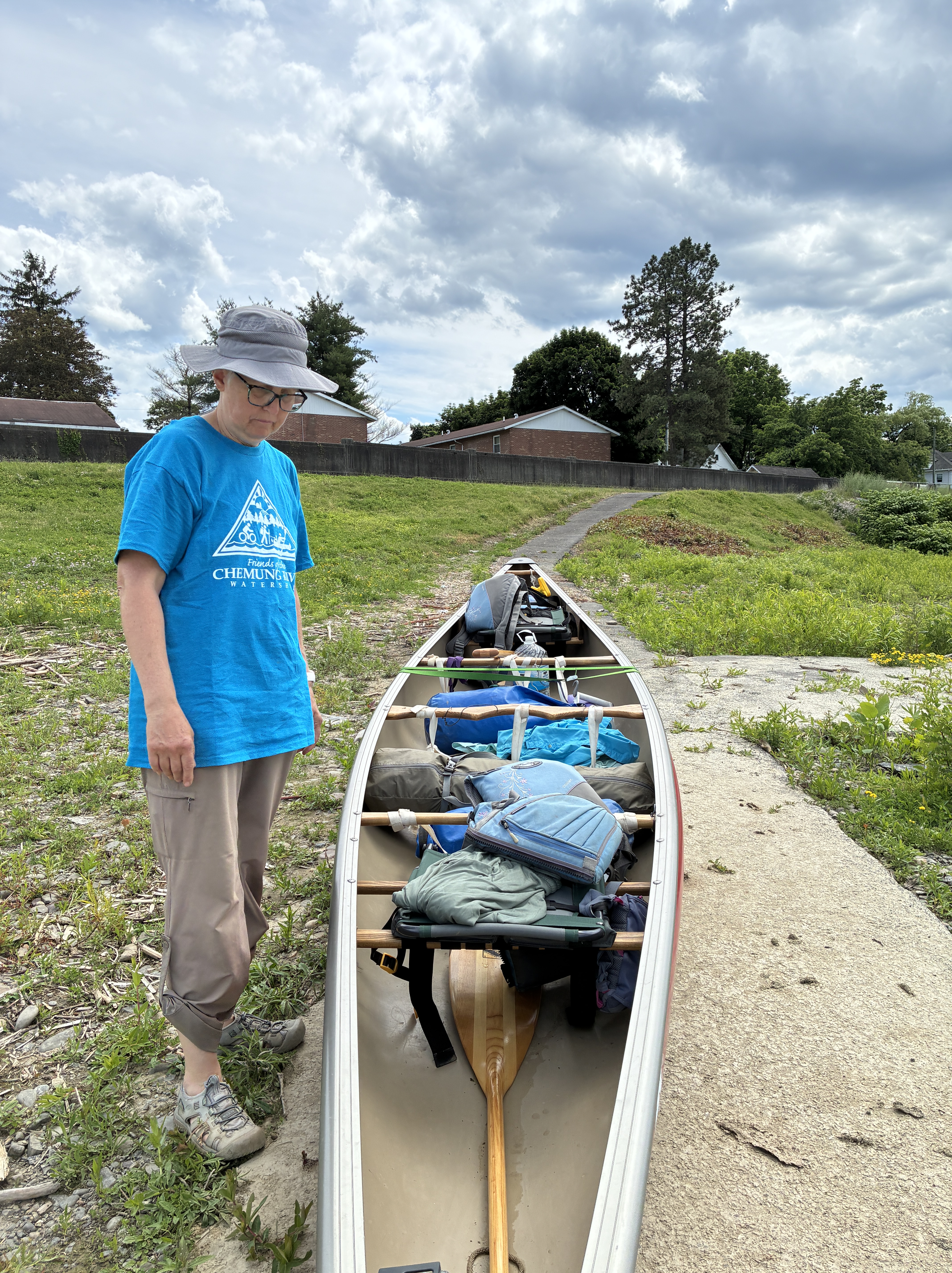
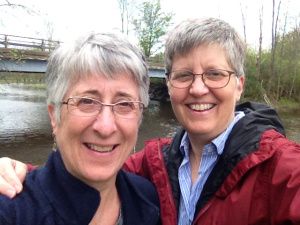
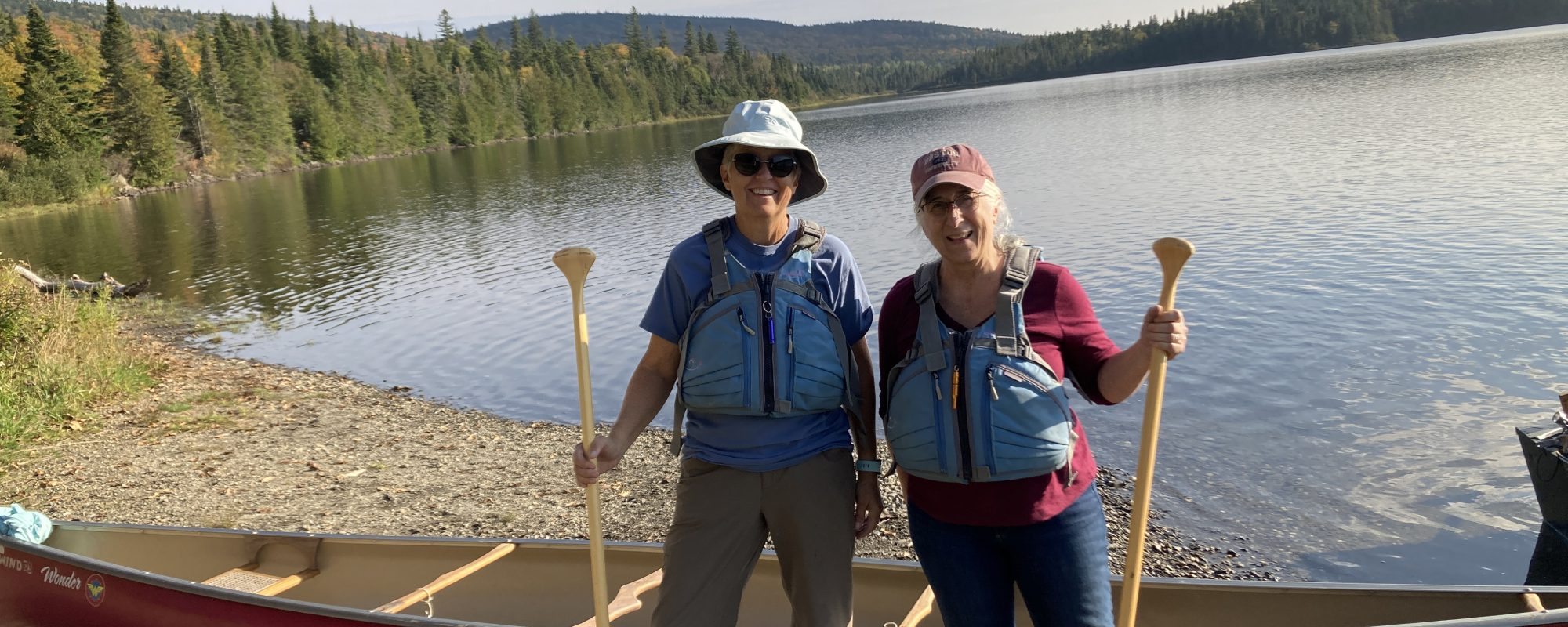
Karen and I chose a different sort of paddle this year. Not as long as we have in the past. And in a place that is dear to me: The Chemung Valley of the Southern Tier of New York State. We enjoyed three days on the Chemung River starting in Addison, NY, and making our way to Athens, PA, where the Chemung meets the Susquehanna River. A total of about 55 miles. We paddled another five miles on the Susquehanna to the next boat access point, five miles that we had paddled a few years ago as part of our four-year journey on the Susquehanna from Cooperstown, NY, to the Chesapeake Bay. And we hit some of the same headwinds that reminded us how difficult some of the larger rivers can be to navigate! We don’t tend towards paddling the same waters more than once but the need to find a spot to get out overtook that. Too many rivers left to repeat any of them!

The weather was great during the day. It was too cold for my sleeping gear in the evenings. Lesson learned there. I will invest in new equipment and remember my long underwear next time, regardless of the weather forecast. The scenery was as beautiful as ever we find on our river trips.

The nostalgic aspect of this trip was strong. Born in 1956 in Elmira, NY, which straddles the Chemung River, memories flowed back to me as we approached the city. Bottcher’s Landing is a river access point now, and I recall back in the day it was a farm and farmstand where my mom would go for flowers and/or vegetables.

And what was that park that was accessed by trolley? Boom, the memory came back: Rorick’s Glen. It had been an amusement park and entertainment center for a couple of decades at the start of the 20th century. It was long gone when I was a child, but we still managed to get over the old wooden bridge and spook around. Nothing remains of the bridge but the abutments.
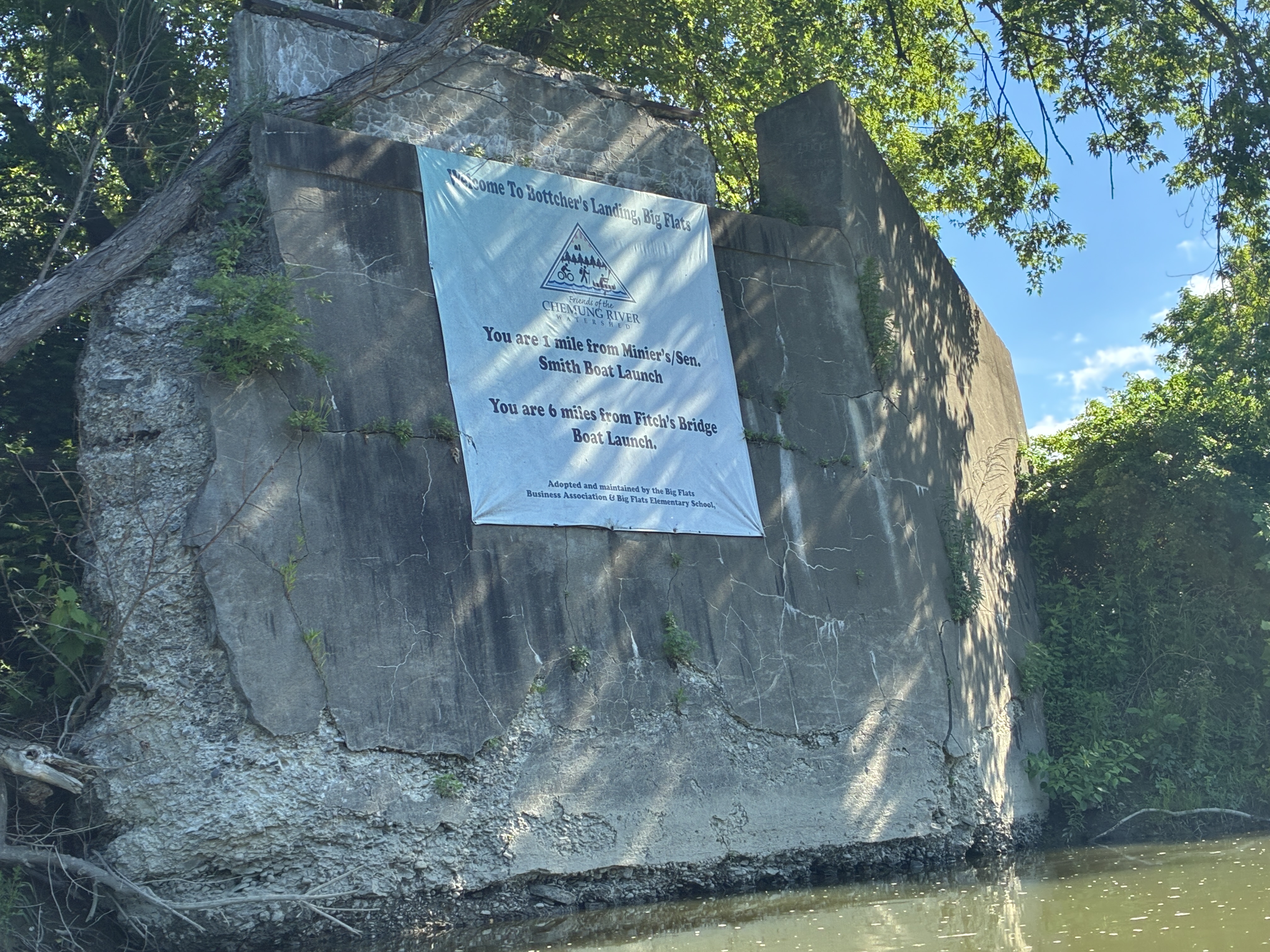
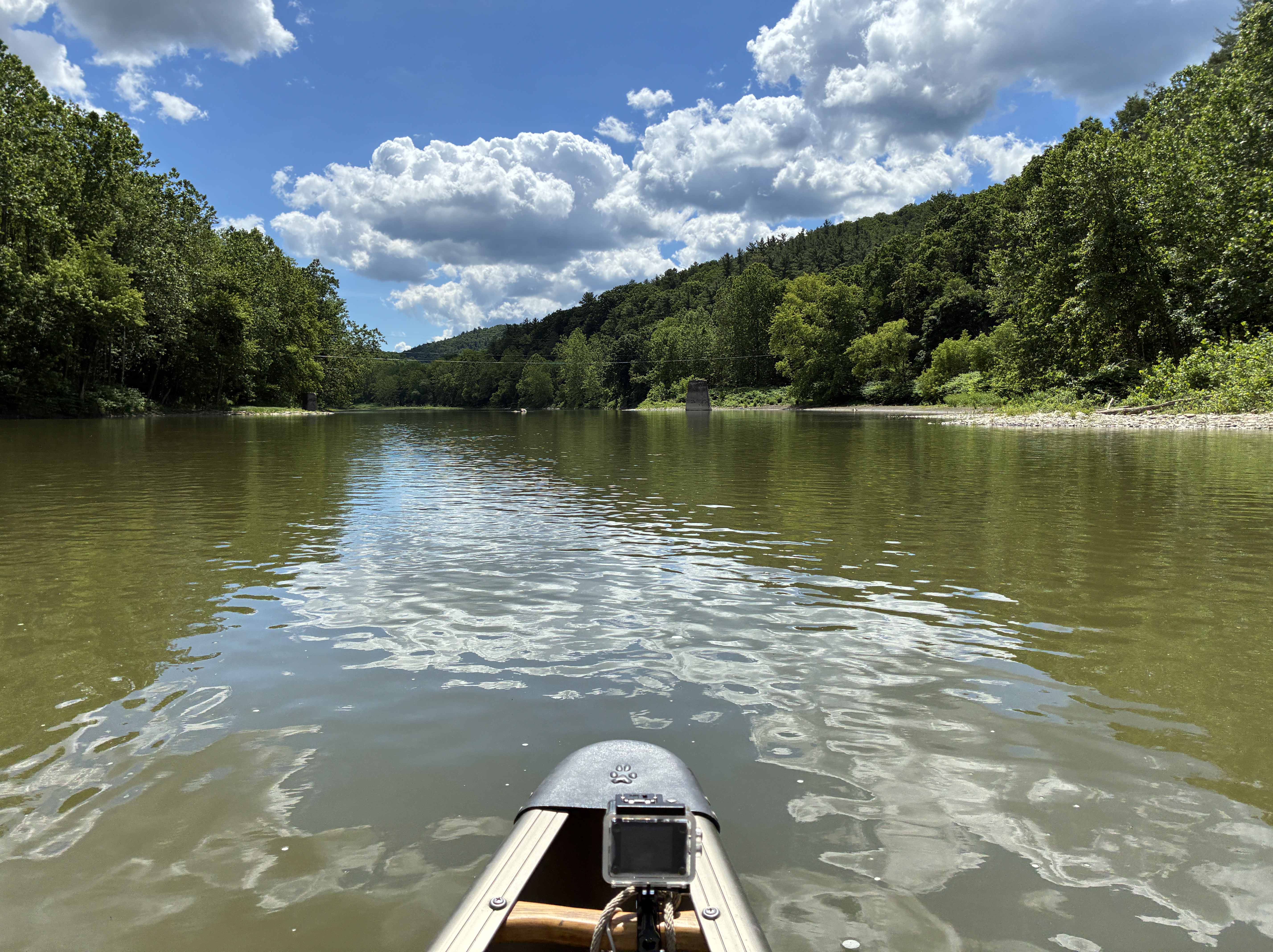
Paddling towards West Elmira where our house was, we passed under Fitch’s Bridge, one of the many bridges connecting downtown Elmira and its Southside. My mother used that bridge to “relocate” the squirrels she trapped in her yard. It was a never-ending job! Speaking of my mother, Mary, I had a chance to reunite with her Goddaughter and my friend who lived next door, Mary Marsden. By chance we were both in the area and it was fun to include her in this year’s journey.
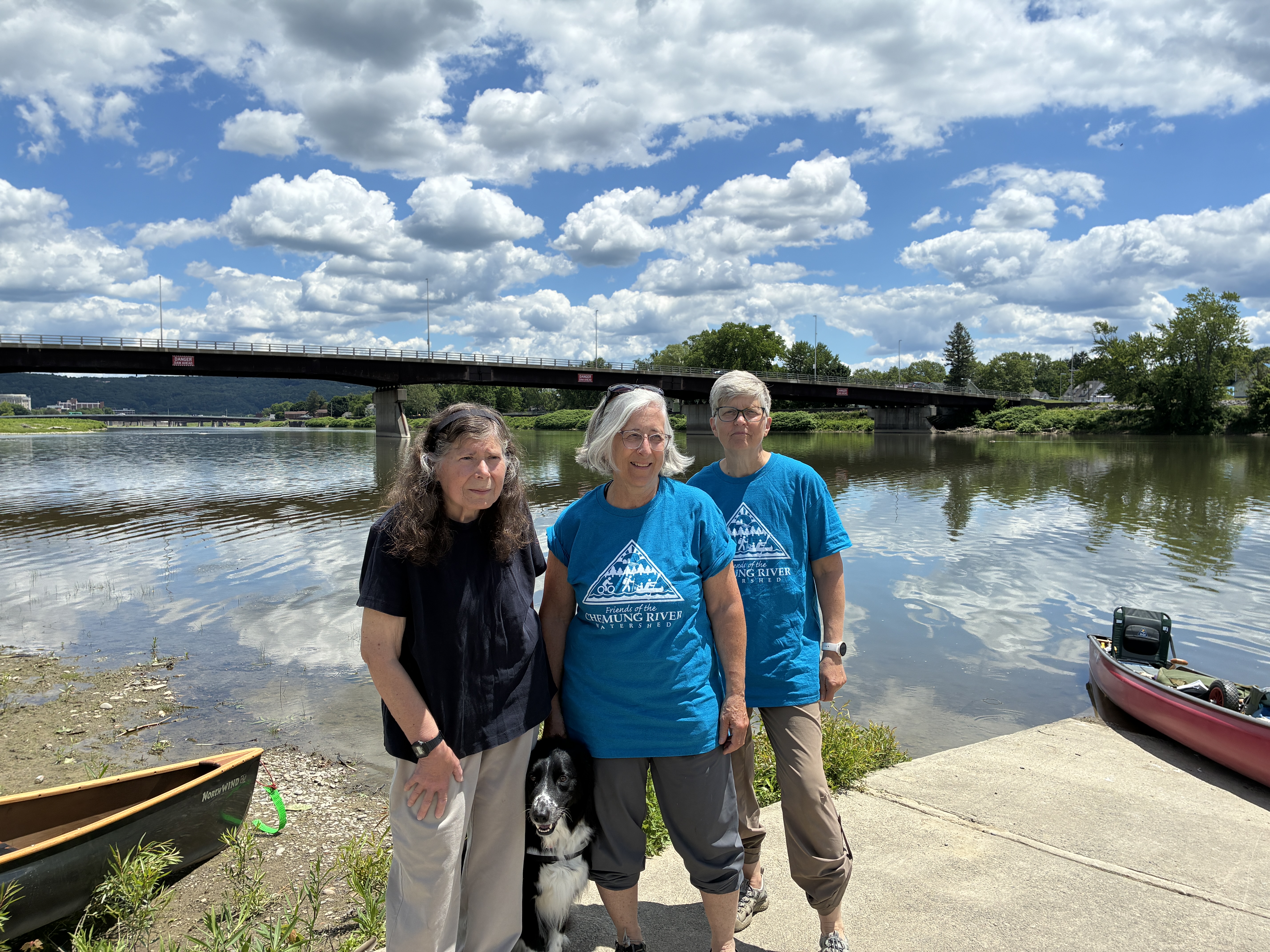
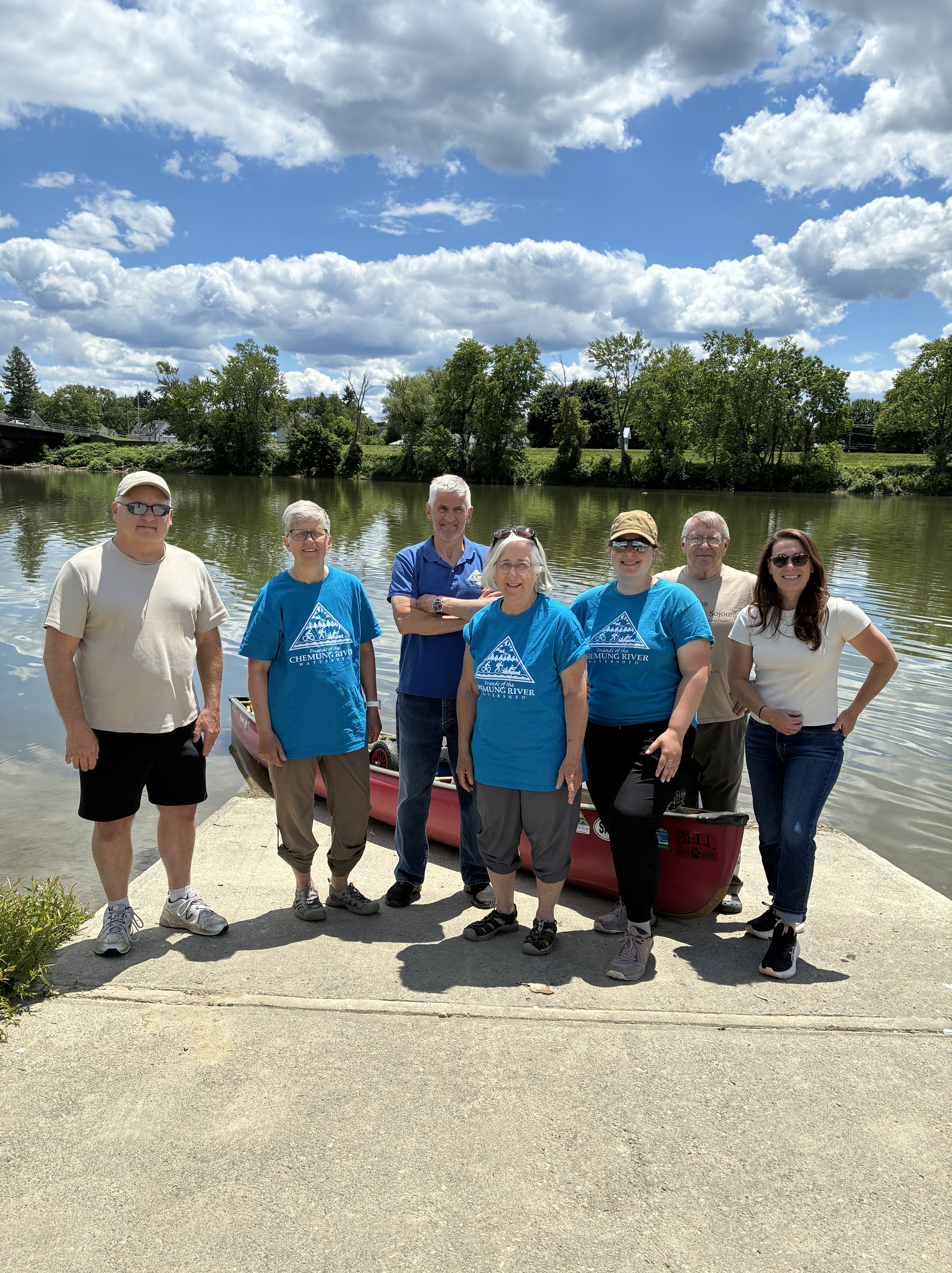
A special highlight of our trip was meeting up with the Friends of the Chemung River Watershed. Not only did they meet us, but they brought along two TV stations who interviewed us. It was our 15 minutes of fame and a great way to help the cause of the river! Each took a different slant on our story. One (WETM) was focused on the river. The other (WENY) focused on these old women paddling our hearts out! We laughed as we listened! We were in the local Star Gazette as well.
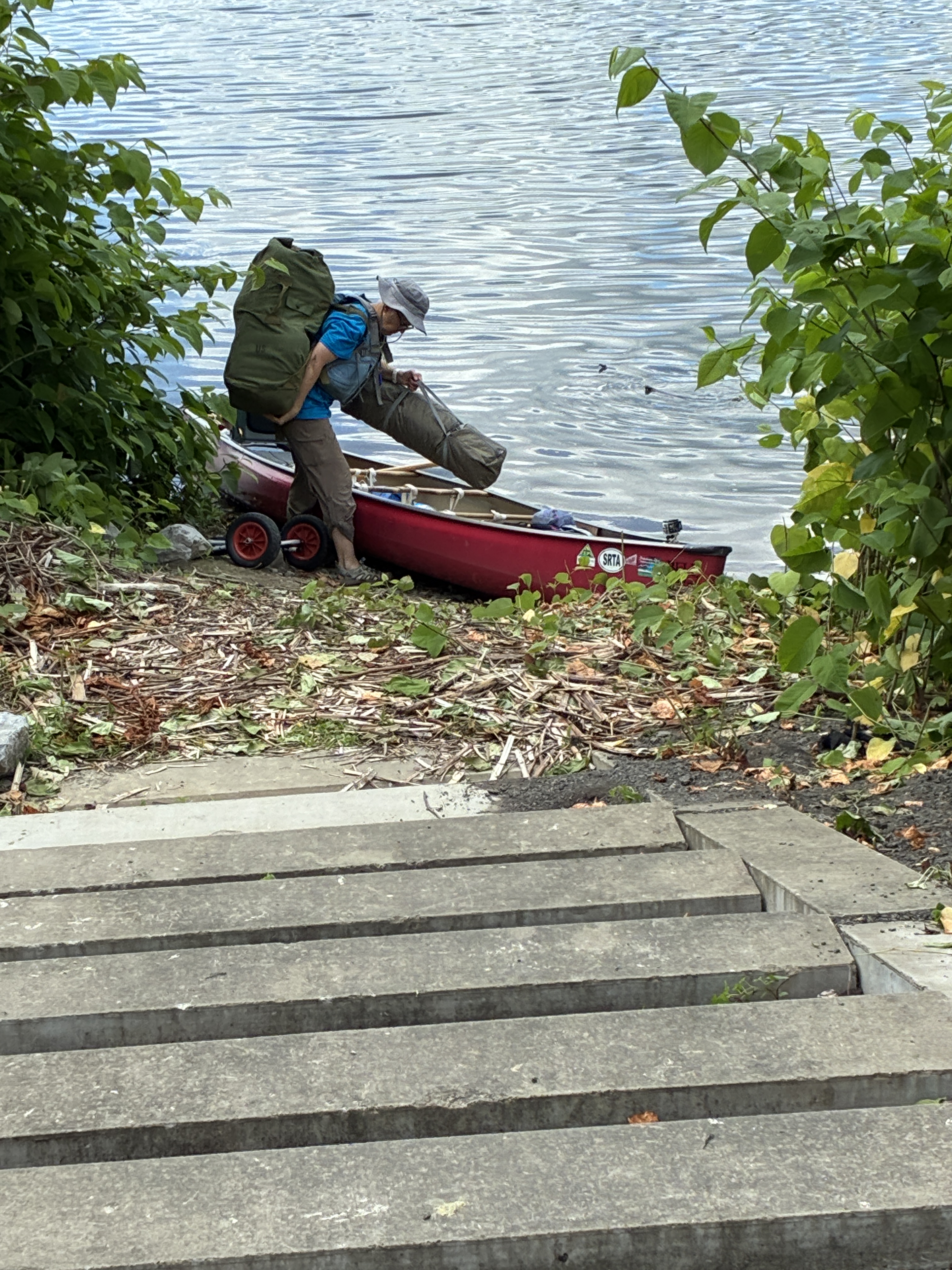
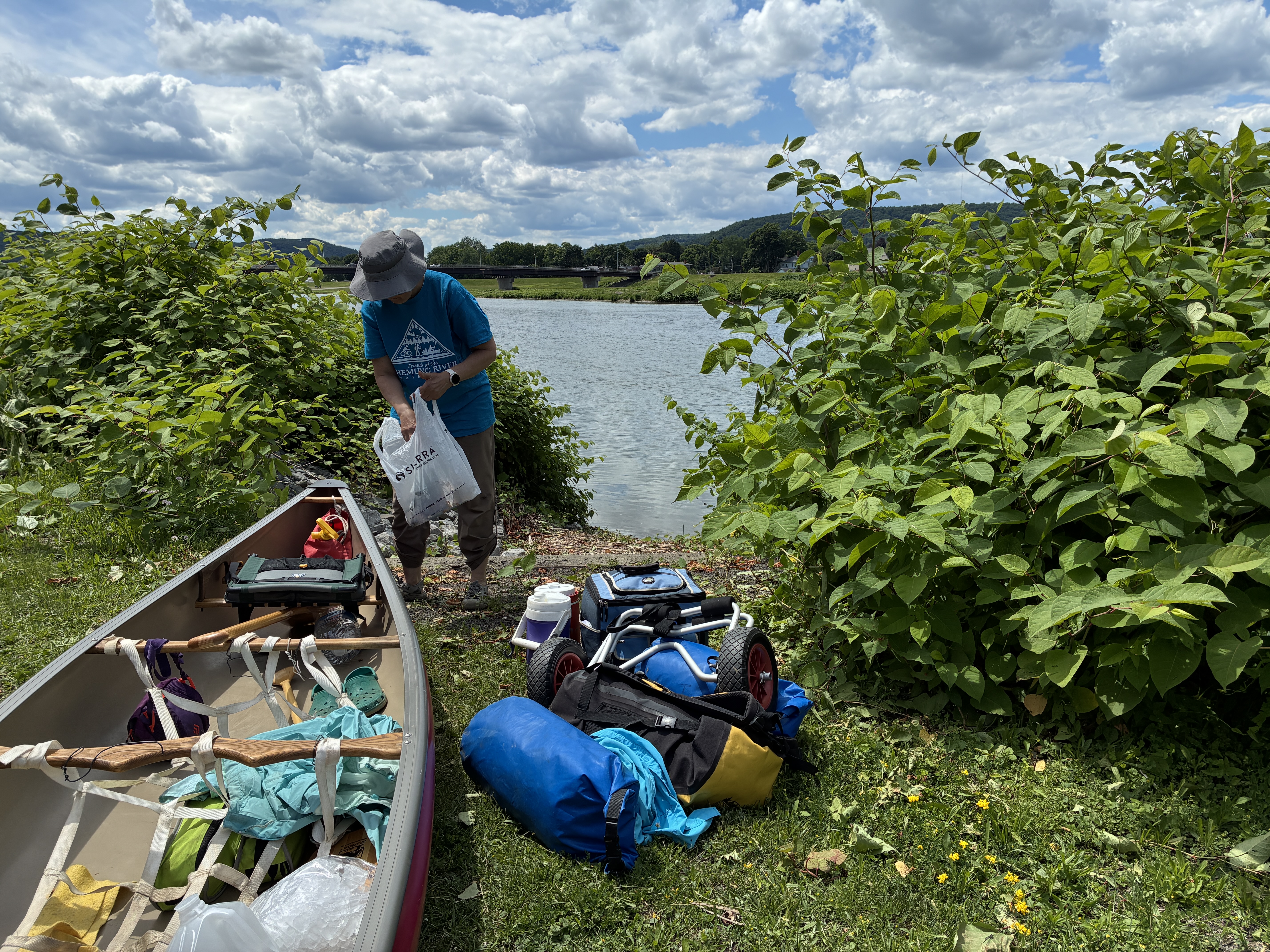
The dam in Elmira was our only portage this year. Our new friends had cleared out the spring growth (nasty knotweed that overtakes indigenous plant) the day before so that we could pull up the gear and the canoe and get it around the dam. The dam creates a pool of water that is treated to become the drinking water for the city. The portage is very near where my parent’s first apartment was and where my sister came into this world.
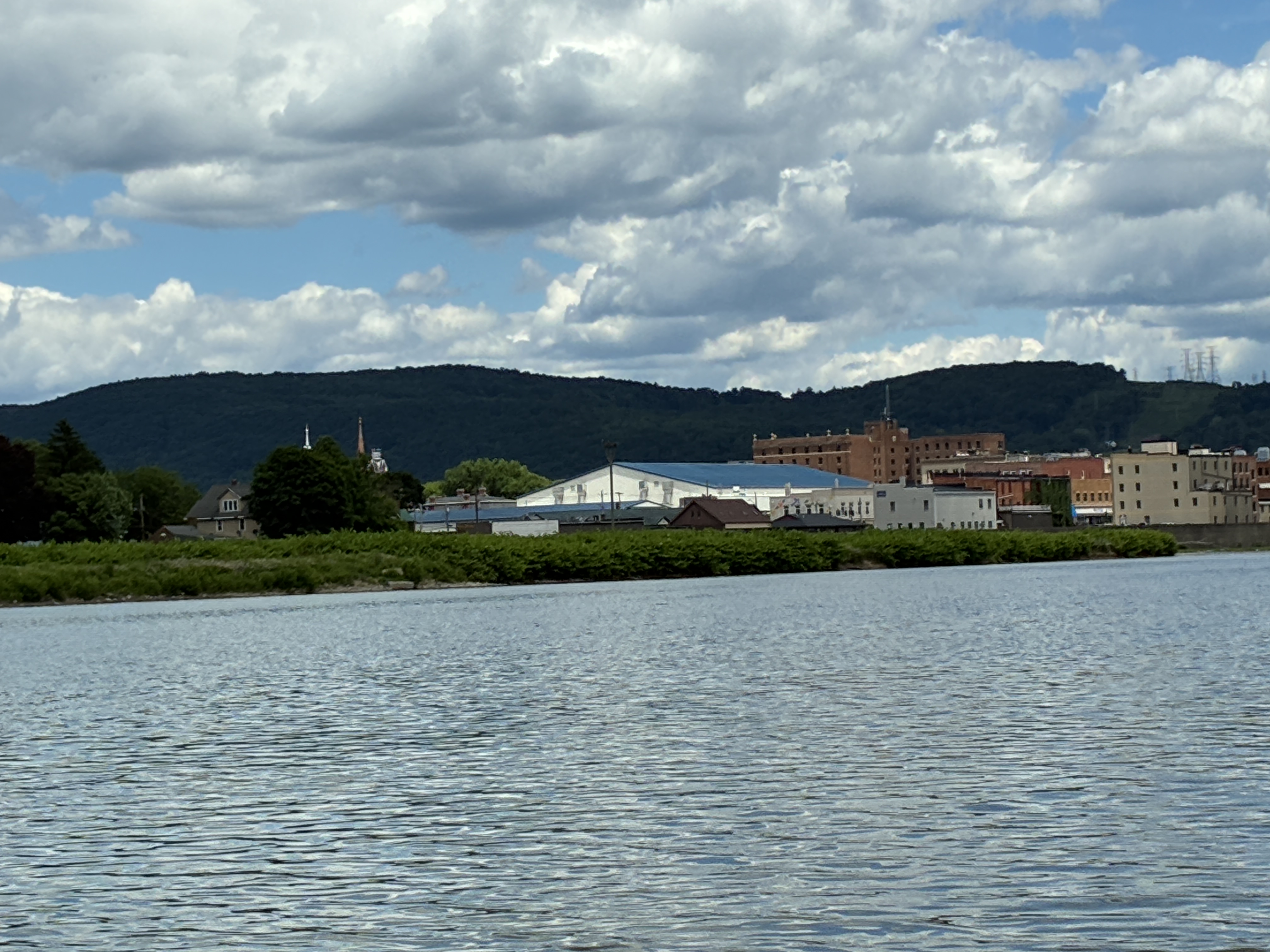
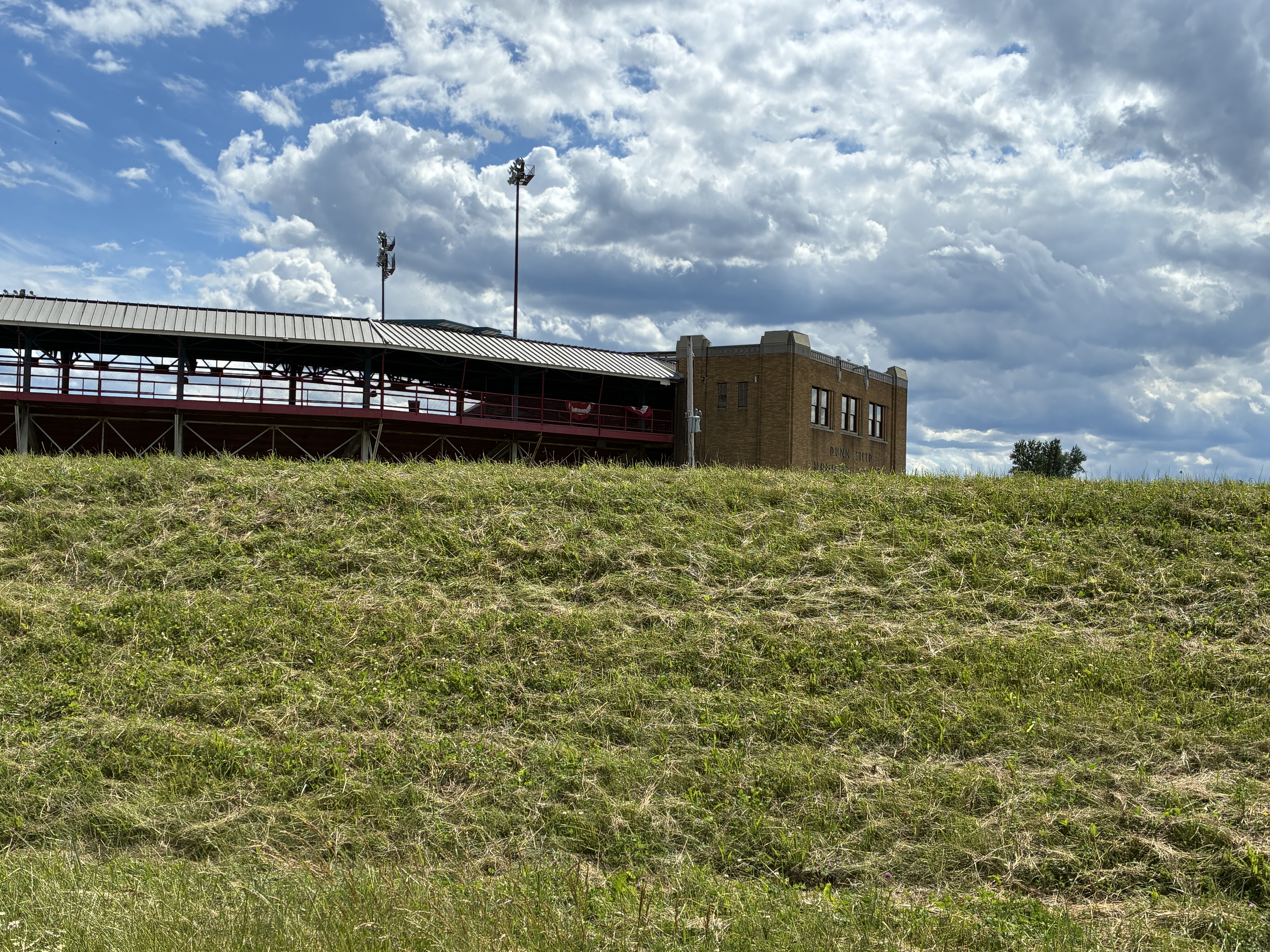
As we paddled out of downtown Elmira, we approached Dunn Field, forever emblazoned in my mind not for my high school graduation but for the streaker who stole the show at the end! My first of two streaker spottings in 1974
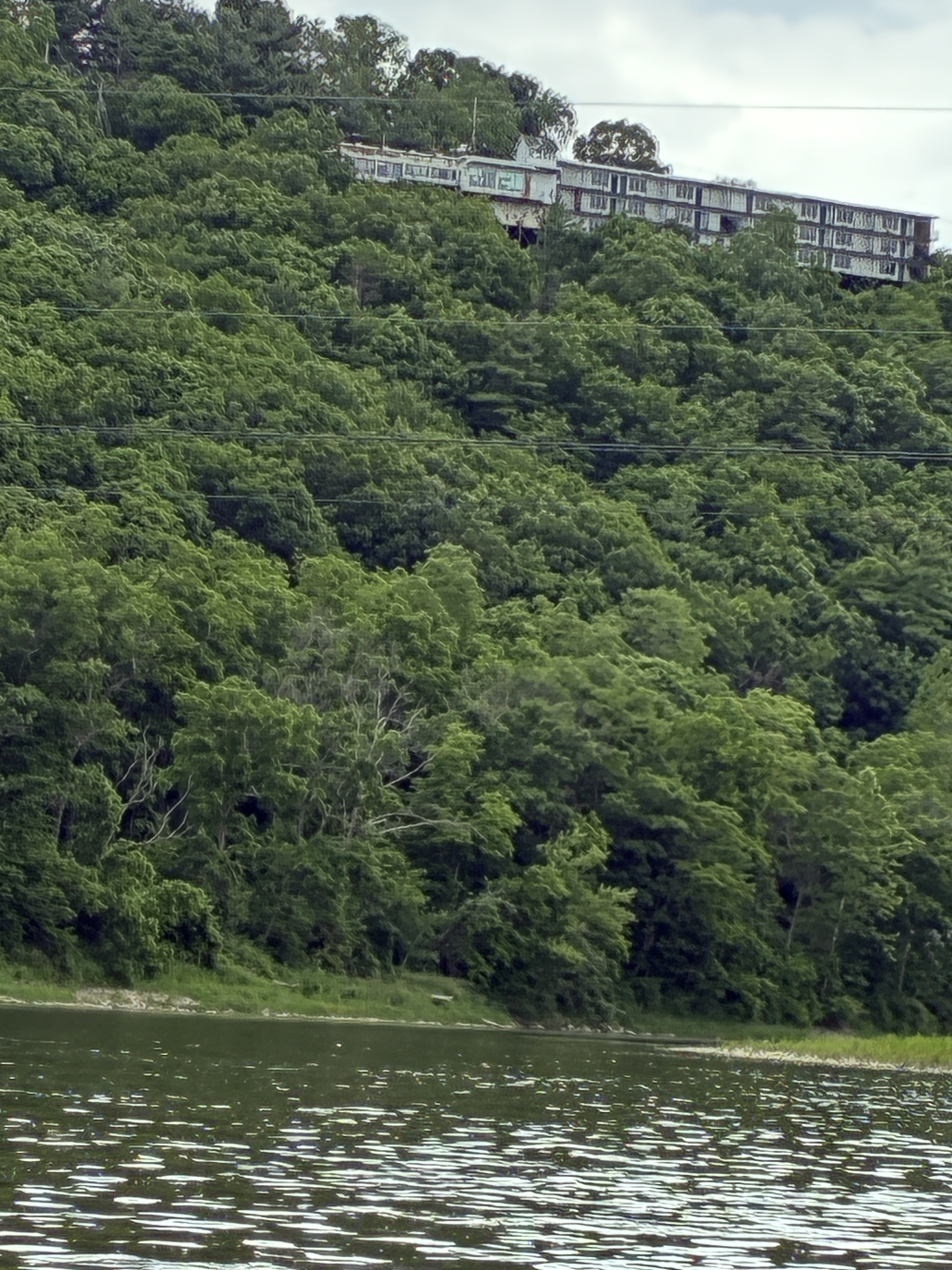
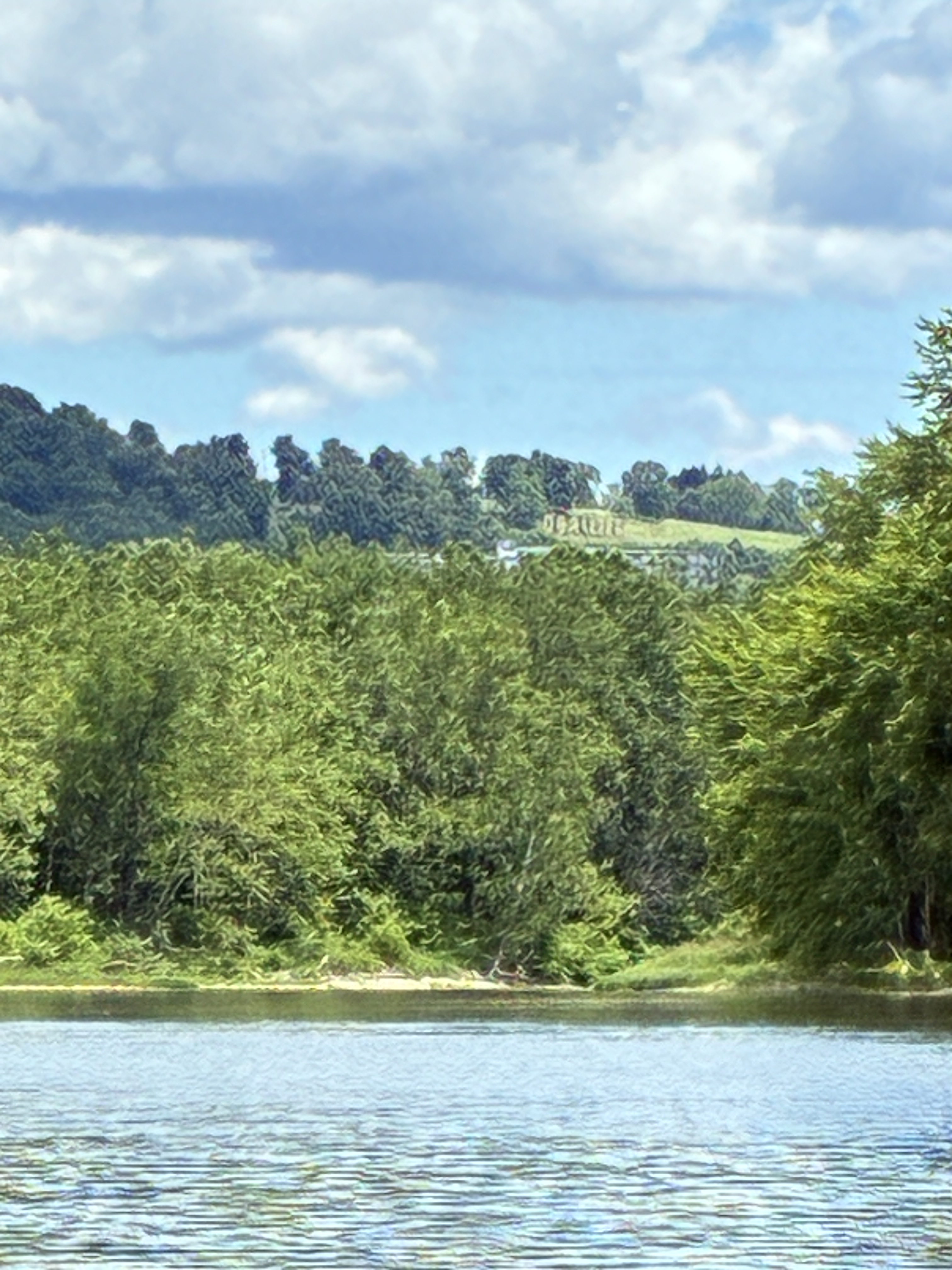
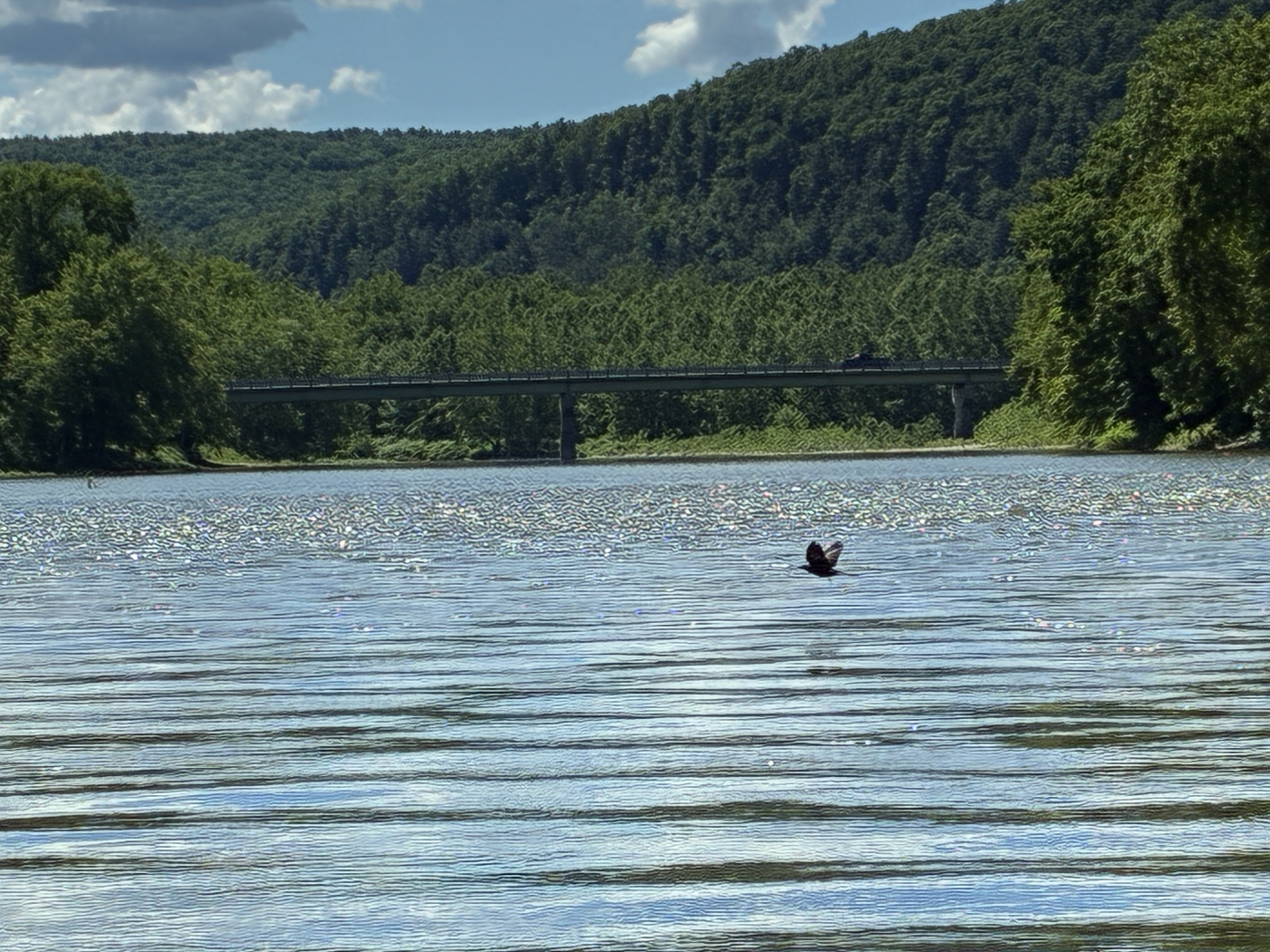
Winding beneath the remains of the hotel that used to be on a main road, we made our way from the nostalgia of the Elmira area toward Waverly where the river dips into Pennsylvania, heading to the Susquehanna. At that point it was back to things as usual on the river: beautiful scenery, heron, osprey, eagles, turtles…and even a two-foot-long water snake which Karen spotted just as I put my feet in the water on either side of the canoe! Needless to say, I pulled my feet in quickly and never saw the snake slithering off.

Elmira is behind me now, literally and figuratively. Much of what I knew growing up is gone. It remains a river town, with all the challenges and hospitality that we have experienced on every river we have paddled.
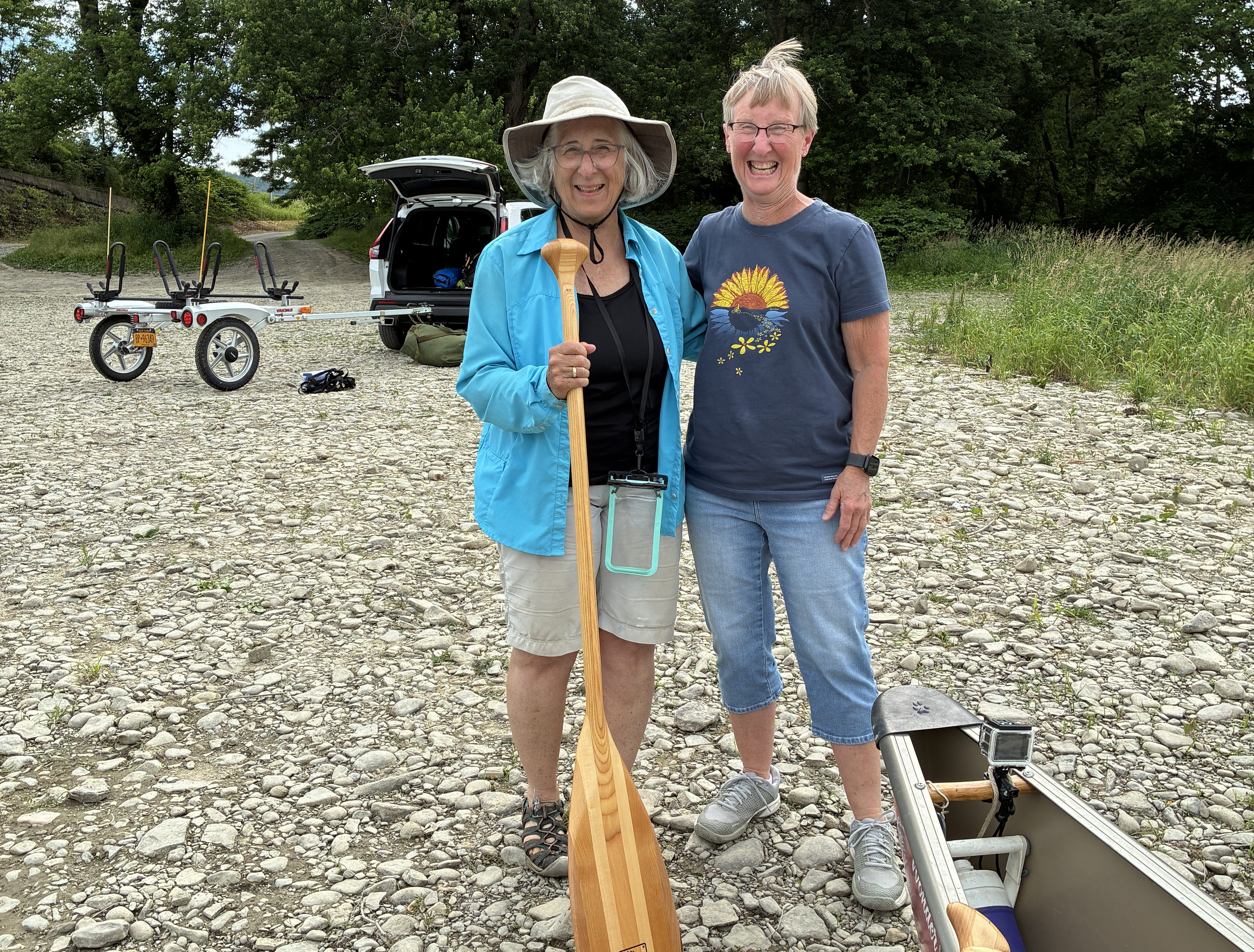
One last bit of nostalgia: Kim, who Maggie met in elementary school 60+ years ago, was our river angel who came to fetch us at the end of our trip and take us back to Corning where our cars were. I have only seen her twice since graduating from high school at the above-mentioned Dunn Field.
The start of 2026 canoe journey from Maggie‘s perspective:

The choice of the year’s itinerary started with me thinking about the possibility of paddling the Chemung River, a shorter river than Karen and I usually consider. The Chemung flows through my hometown of Elmira, New York. I’m in Elmira now having arrived last night, and I write this post from the bedroom of my next-door neighbor’s house from when I was a child. It was a second home to me. I’m looking out the window onto the house that I lived in for 18 years and visited for decades after until 20 years ago when it was sold. I’ve been helping my friend Mary whose brother John just died at age 69, having lived in this house his whole life. We have been organizing John’s belongings. Needless to say, Mary and I have been discussing many childhood memories, visiting cemeteries of both my family and my other extended family, the Jacobson‘s, going past childhood landmarks and the houses of friends growing up.

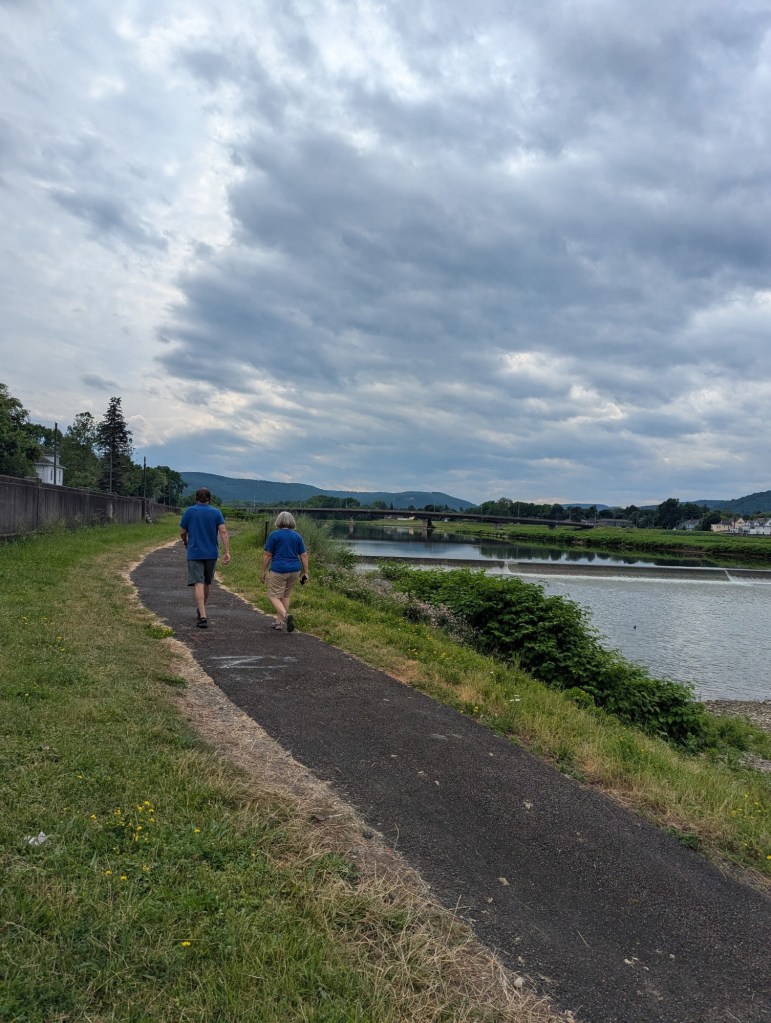
Elmira is a struggling post industrial city. It’s a river city, and like most river cities nowadays, it is cut off from river views by levees and flood walls. Having lived through the flood of ‘72 I know that flood walls are important, but I’m always sad that the rivers are not visible from most of the cities and towns that have flood protection along riverbanks.

How much of Elmira has changed over the years due to a large degree from its waning economic prosperity! One thing has not changed and that is the river, even though it is not visible, except from bridges.


And so I want to begin our trip tomorrow with that reality in my heart. While the buildings change, while people die, and important landscapes have changed, to quote that famous movie, the river still runs through it.


I’m driving from Elmira to Corning tomorrow where I will meet Karen at the house of her friend Beth, who will drive us up to our put-in point this year somewhere around Addison, New York, on the Canisteo River. It flows into the Tioga River and then to Painted Post, NY, where it will converge with the Cohocton River and become the Chemung River.


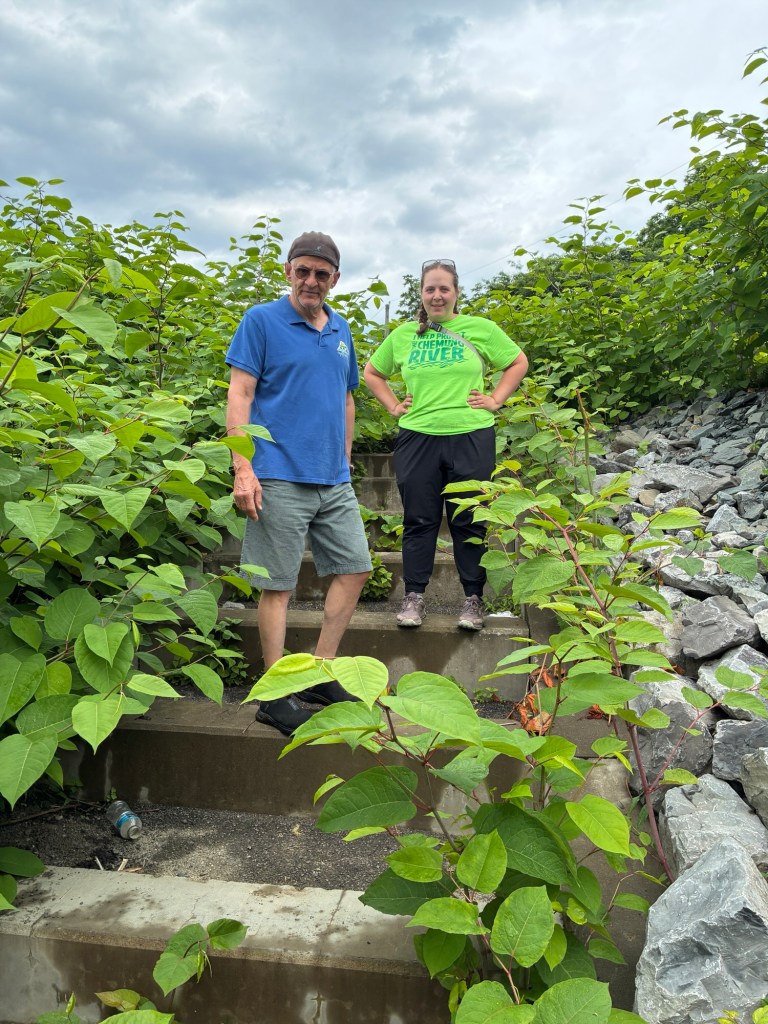
I had the privilege of meeting Cait and Jim from Friends of the Chemung River today as we walked along the flood walls and scoped out the portage around the only dam that we will have to get around on this trip. In addition to these new friends who hope to paddle with us for a little while, I also get to reunite with a school friend, Kim, from now over 50 years ago, who will help us by transporting us from our end point in Pennsylvania back to Corning.

So this year, the river winds through the friends and family of my past, living and deceased, as well as the present with newfound friends. We have yet to know in upcoming days what else the river will provide for us.

Jim and Cait on the overgrown portage steps out of the river. Cait is hoping that the city can clear it out before we get there in a couple of days. This is where some of the other peddlers might join us for a few miles.  Fun fact: Jim knew both my father and Mary’s father decades ago.
Jim and me checking out the portage trail and the dam which you can see to the right across the river.

A new year 2026

A year has passed since we paddled the bulk of the Connecticut River in 8 days. The river froze over this winter more that I had seen in our 11 years in Vermont. In many places it was flat ice that could be skated or walked on, unlike the choppy chunks I usually see due to freezing and thawing multiple times. This past winter in New England was mostly freezing! In fact, summer is having a hard time arriving. We still have temps in the 40’s.

But now the river is thawed and, crossing it many times a week to travel to Claremont, NH, I think fondly back to last year…even the night we thought we might freeze to death! I have actually paddled on it a couple of times this spring. Yes, I finally bought a used LL Bean kayak! I resisted getting a kayak for many years and for many unreasonable reasons. But the river and ponds of New England call to me and I want to get out more than once a year. And I treated myself in honor of entering my eighth decade of living as of my 70th birthday in April.

Now it is time to plan a new trip in a few weeks. However, I realized I never summarized last year in this blog! So, please click here to read some of the high points and low points of those two weeks!

Meanwhile we turn our paddles to a much smaller river though it is very significant. I grew up in Elmira, NY, which straddles the Chemung River, a short but stately little river that provided livelihood to Elmira for a few hundred years. Our family dates back to around 1800. But for all our history in that place, I have NEVER paddled the Chemung River. I find this fascinating and have pondered why. The best answer I can come up with is that in the mid to late 20th century, many of our rivers remained industrial. They were ugly and polluted. They were not seen as a place for recreation.

Fortunately, things have changed. People are studying the nation’s rivers and learning about them. Karen has become a volunteer with the PennState Extension Master Watershed Steward Program in Western PA…the watershed that fed our first 1234 miles of paddling. I have recently joined the Connecticut River Conversancy volunteers and have also learned about the Vermont Center for Ecostudies Loon Conservation Project. We do these things because we now have some time in our retirements and because we have learned how important our rivers are. So many people before us had to fight to clean up the rivers and create recreational opportunities. It feels good to help sustain some of that work.

So, on June 15th, we will meet at the headwaters of the Chemung River, somewhere near Hornell, NY. We will paddle the short 45 miles down to Athens, PA. Depending on our timing perhaps we will paddle of few miles on the Susquehanna River that takes the waters of the Chemung and deposits them eventually in the Chesapeake Bay.

Hopefully I will report that trip sooner than I did last year’s. Thanks for paddling along with us.

The Erie Canal 2024

There is always the excuse that life is too crazy to keep me from catching up on my posts this year. But it is only an excuse. Truth is I watched too many crime shows on TV to escape the painful political scene that unfolded throughout the year. Though it was also simply a crazy year. It was thankfully also one that was interrupted in the pleasantest of ways by another water paddle with Karen.

For many reasons, we did not take the path we intended. Last year (2023), we explored the Upper Connecticut River Lakes, the headwaters of the Connecticut River which powered so much of New England’s industrial revolution. Today it still provides electricity and tourism and incredible scenery as it winds its way down the border of Vermont and New Hampshire, though Massachusetts and Connecticut, and into the Long Island Sound. I managed some posts of those adventures with our spouses before the end of 2023. It was our intention to paddle the whole length of the Connecticut River in one fell swoop in 2024. Now, we are hoping to do it next year, in part or in whole.

I’m cutting it pretty close as I have one more day to post some stories about our alternative route this year on the Erie Canal. This was a first for us. Getting in a river in the middle and getting out before it ended. Our story has been to start at the headwaters and end where a river pours into a new body of water.

River, you may ask. But we thought you went on the Erie Canal? Approved to be built in 1817 and completed in 1825, the original canal was 363 miles long and was carved out of much of the Mohawk River which still at times runs alongside the canal or merges with it. It is kind of a river and a canal at the same time.

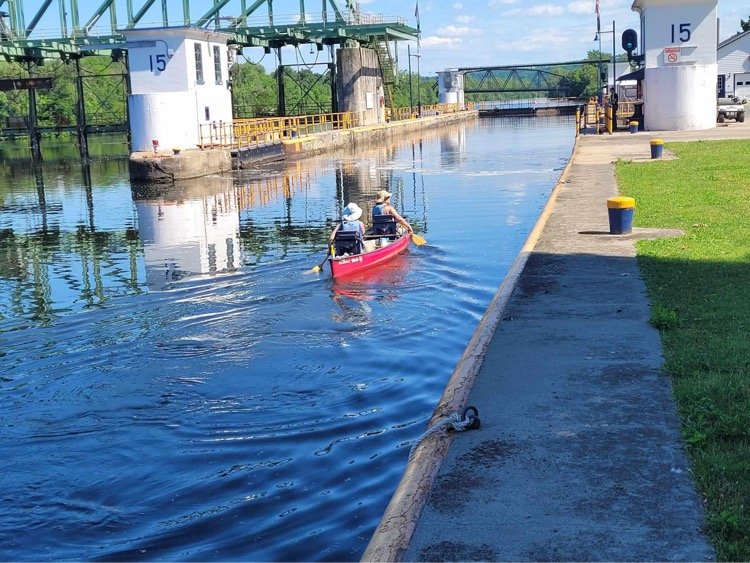
The Mohawk River served as a transportation artery for the Seneca Nation long before Europeans like Hudson charted the territory. Dugout canoes were their vessels. With European colonization and expansion, The Erie Canal was a major artery for western expansion and development from Troy, NY, on the Hudson River, to Buffalo, NY, on Lake Erie. From Lake Erie the possibilities of commerce, travel, and expansion were nearly limitless even in an era of mules and barges and steamboats. It remains a major waterway, mostly for outdoor tourism, today. It is well maintained by a series of locks and dams and is run by the NYS Canal Corporation.

Why the Erie Canal? We picked it this year because it was easily accessed by both of us and seemed like it would require less effort. The latter was not necessarily the case, but our choice took us on an historical journey more robust that the ones we travelled on other rivers. The big rivers we have paddled have their share of history but on the Canal the history seemed more compact, and markers and information laid out by the Erie Canal Way National Heritage Corridor were packed with details that neither of us, having lived in New York State for a combined 70 years or so, knew.

What was similar in our journey this year to our weeks of paddling the streams of Western New York, the Alleghany River, the Ohio River, and the Susquehanna River, is that wherever we went, the beauty was amazing. People were beautiful and kind and had interesting stories to tell. Kindness is sometimes experienced simply by another woman recognizing our desperate need to use a toilet and letting us into a clubroom that would normally have been locked to us. On all rivers, there is industry along with natural beauty but even the industrial scenes have their own beauty: the steel, the carefully laid carved rocks holding the sides of the canal up, the locks. Of course, we still find the natural beauty the most pleasing as we depart from our day to day lives each year to find a new adventure in our friend Wonder, the red canoe.

Tomorrow, I will share some details for our days on the canal and try to conclude this season by midnight so we can start planning 2025.

Finally getting to see the headwaters

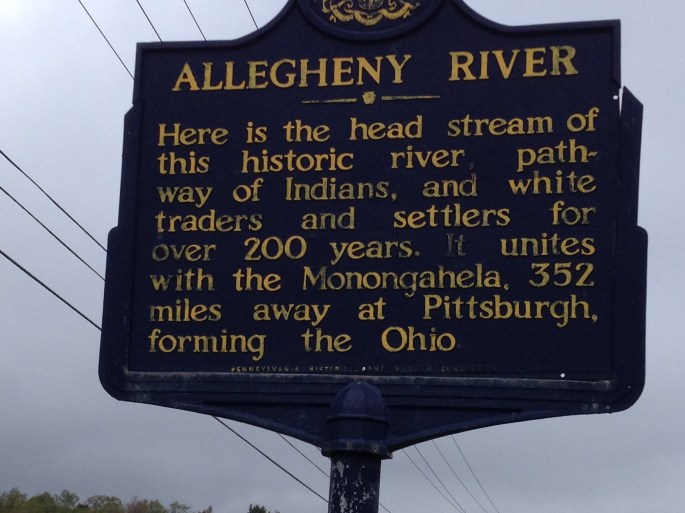
IMG_3252[1]I only remember seeing the headwaters of one river before last year.  It was the Arkansas River.  That’s when I learned that rivers seem to be named for where they end, not where they begin.  That’s an interesting notion to me!  Somehow I had always thought that the headwaters of a river would be grand and obvious.  The Arkansas starts in Colorado and the headwaters are a mere stream, of sorts, going through a meadow.  This proved to be the same with the Allegheny.

After completing our flume/luge-like experience, our friend John was kind enough to oblige my desire to see where the river really started.  I had googled it and found a sign indicating the headwaters.  I wanted to see that sign and so he guided us back up river about 30 minutes to the meadow where the waters trickle together to begin the stream that becomes a river with deep waters and deeper history.  The stream was tinier than Cassadaga Creek, that small waterway we had started on years earlier.

I still find it amazing that great things have such humble beginnings and I wonder if we will be able to someday say that we paddled to the other end of that river where it dumps its muddy waters into the Mighty Mississippi.IMG_3249[1]

Remembering the Past

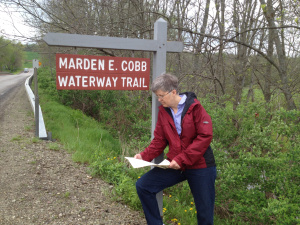
Our second day of adventure in 2014 took us back to where it all began in 2001.  It was a short drive to Red Bird Corners in Sinclairville, NY, and one of the public access areas to the Marden E. Cobb Waterway Trail. My family used to live 1.5 miles up hill from this crossroads. I remember thinking one day when I was driving home that one could put a canoe in the creek there and paddle for months and get to New Orleans. It took me some time to find out that Karen was up for that adventure though we knew right away that we could not go all at once. The trip would have to be many years long, a segment at a time.

When we walked to the creek’s edge, it was clear that a lot of rain had fallen. The creek was swollen and moving fast.

Old friends back at the edge of Cassadaga Creek where it all began.

The swollen waters at Red Bird Corners

Karen studying the map for where to go next.  Upstream to Cassadaga?
Karen studying the map for where to go next. Upstream to Cassadaga?

We wondered if we could get in above that point, perhaps even at Cassadaga Lakes, so we went on a drive to various put-in areas and found the water everywhere was over the banks, making once dry land into marshy land. We could not see how we would get in or get out. Finally we ended up at the lakes behind a fire department building where there was a place we could put in but the journey ahead somewhat resembled the Okefenokee swamps. Karen wondered if we could even find the main channel. And the wind was blowing hard upstream, a scenario we all too well remembered from our last day on the Ohio River last June. It is really NOT fun to push against wind in a canoe.

Completing our reconnaisance, we drove to Allegheny Outfitters in Ashville, NY, and treated ourselves to some new neoprene gear. Karen purchased some pants and I purchased a shirt. It’s always fun to add a new item to our gear. I remember the first year we purchased something special for our trips. We bought paddling gloves. I felt so professional! Since then we have purchased or been given wet suits and booties, tiny cook stoves, new sleeping bags and, of course, the canoe and paddles. It dawns on us periodically that we are seasoned canoeists! There were yet challenges that would confront us the next day that reminded us to stay humble, gear or no gear, experienced or not. We went back to Karen’s that afternoon and prepared ourselves for a two day trip starting at the headwaters of the Allegheny.