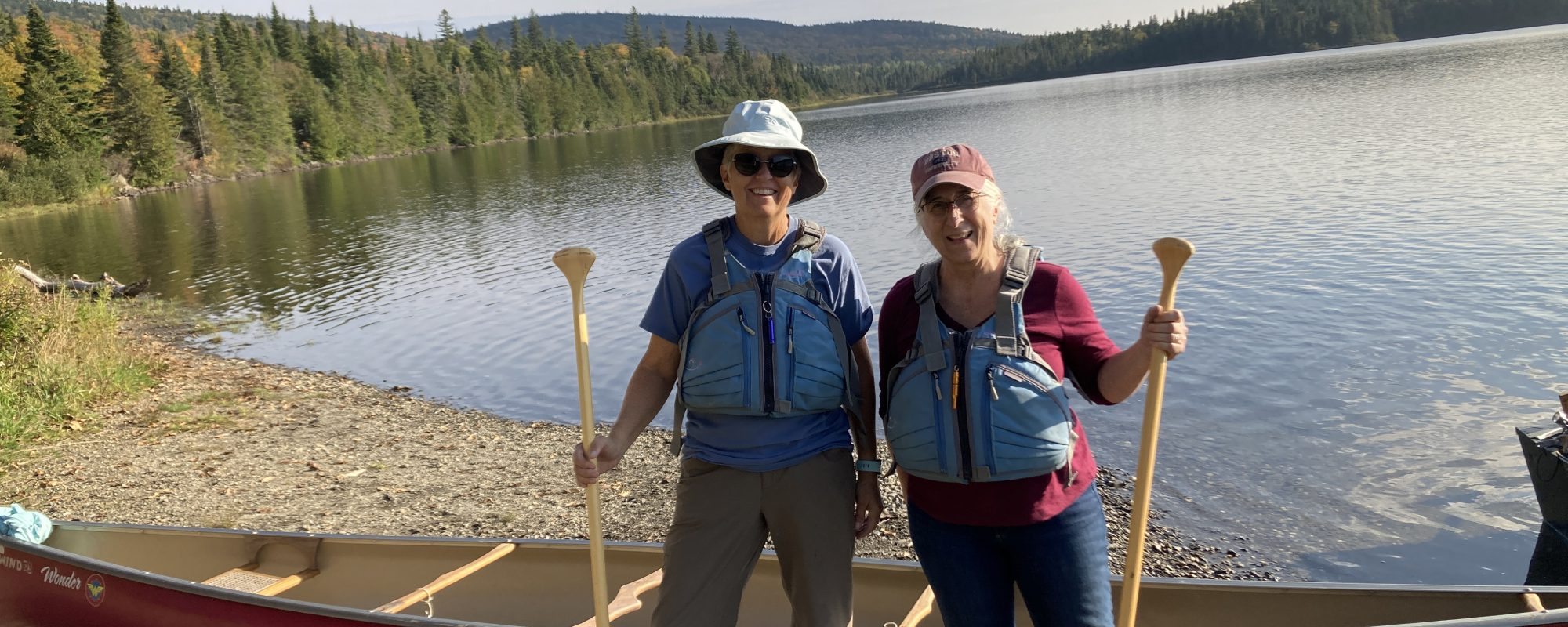
There is always the excuse that life is too crazy to keep me from catching up on my posts this year. But it is only an excuse. Truth is I watched too many crime shows on TV to escape the painful political scene that unfolded throughout the year. Though it was also simply a crazy year. It was thankfully also one that was interrupted in the pleasantest of ways by another water paddle with Karen.
For many reasons, we did not take the path we intended. Last year (2023), we explored the Upper Connecticut River Lakes, the headwaters of the Connecticut River which powered so much of New England’s industrial revolution. Today it still provides electricity and tourism and incredible scenery as it winds its way down the border of Vermont and New Hampshire, though Massachusetts and Connecticut, and into the Long Island Sound. I managed some posts of those adventures with our spouses before the end of 2023. It was our intention to paddle the whole length of the Connecticut River in one fell swoop in 2024. Now, we are hoping to do it next year, in part or in whole.
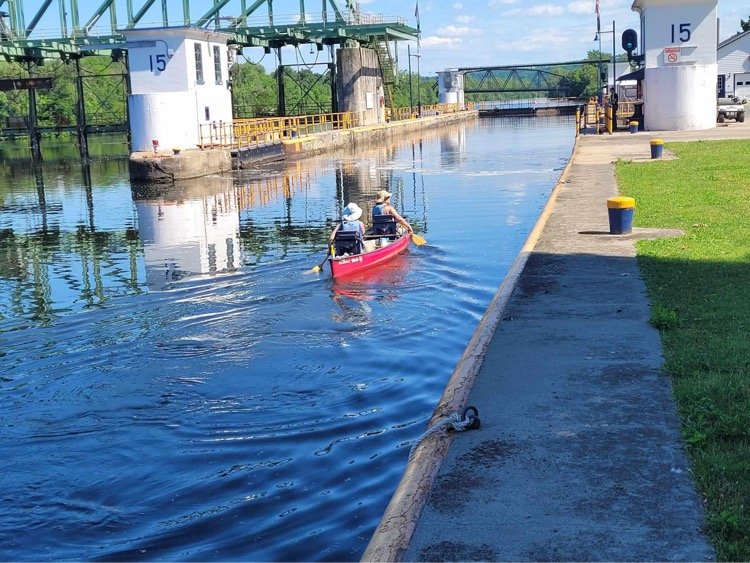
I’m cutting it pretty close as I have one more day to post some stories about our alternative route this year on the Erie Canal. This was a first for us. Getting in a river in the middle and getting out before it ended. Our story has been to start at the headwaters and end where a river pours into a new body of water.
River, you may ask. But we thought you went on the Erie Canal? Approved to be built in 1817 and completed in 1825, the original canal was 363 miles long and was carved out of much of the Mohawk River which still at times runs alongside the canal or merges with it. It is kind of a river and a canal at the same time.
The Mohawk River served as a transportation artery for the Seneca Nation long before Europeans like Hudson charted the territory. Dugout canoes were their vessels. With European colonization and expansion, The Erie Canal was a major artery for western expansion and development from Troy, NY, on the Hudson River, to Buffalo, NY, on Lake Erie. From Lake Erie the possibilities of commerce, travel, and expansion were nearly limitless even in an era of mules and barges and steamboats. It remains a major waterway, mostly for outdoor tourism, today. It is well maintained by a series of locks and dams and is run by the NYS Canal Corporation.
Why the Erie Canal? We picked it this year because it was easily accessed by both of us and seemed like it would require less effort. The latter was not necessarily the case, but our choice took us on an historical journey more robust that the ones we travelled on other rivers. The big rivers we have paddled have their share of history but on the Canal the history seemed more compact, and markers and information laid out by the Erie Canal Way National Heritage Corridor were packed with details that neither of us, having lived in New York State for a combined 70 years or so, knew.
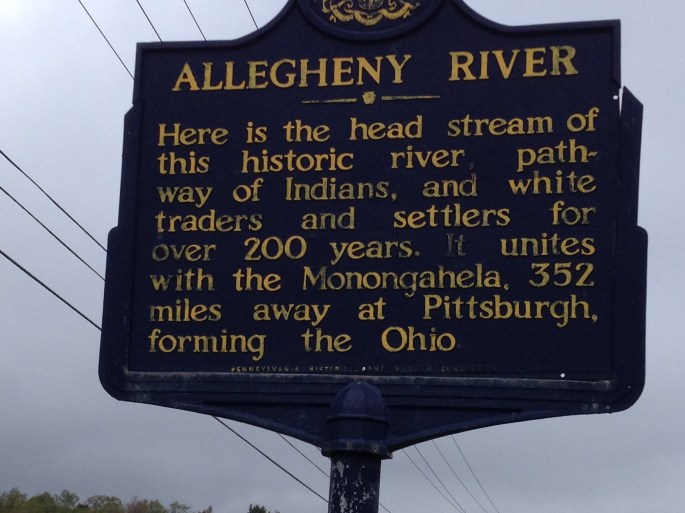
What was similar in our journey this year to our weeks of paddling the streams of Western New York, the Alleghany River, the Ohio River, and the Susquehanna River, is that wherever we went, the beauty was amazing. People were beautiful and kind and had interesting stories to tell. Kindness is sometimes experienced simply by another woman recognizing our desperate need to use a toilet and letting us into a clubroom that would normally have been locked to us. On all rivers, there is industry along with natural beauty but even the industrial scenes have their own beauty: the steel, the carefully laid carved rocks holding the sides of the canal up, the locks. Of course, we still find the natural beauty the most pleasing as we depart from our day to day lives each year to find a new adventure in our friend Wonder, the red canoe.
Tomorrow, I will share some details for our days on the canal and try to conclude this season by midnight so we can start planning 2025.
![IMG_3252[1]](https://paddle-with-us.com/wp-content/uploads/2014/05/img_32521.jpg)
![IMG_3249[1]](https://paddle-with-us.com/wp-content/uploads/2014/05/img_32491.jpg)



 Paddle With Us