June 12: We met in Sunbury, Pennsylvania at around 2 o’clock in the afternoon, Karen having traveled from Jamestown and Maggie from Vermont. We were fortunate to be able to leave a car in a state park in Sunbury where we hope to end on Thursday or Friday. And then we drove up to Towanda where we ended last year. The local mechanic let us leave another car there and by 5 o’clock we were out on the river. We intended to paddle for about 5 miles to a rustic campsite that was on our map but we couldn’t find the campsite and kept on paddling. 10 miles in we found this amazing place called French Azilum. We had Marie-Antoinette to thank for this place as it was developed in hopes that she would escape the French Revolution and her life would be saved here in Pennsylvania. We all know how that ended. But we were grateful to have an asylum of our own there on the banks of the Susquehanna River.


This is a well-marked ramp and a welcoming campsite. Information about the Azilum (asylum in English) is on a board at the top of the ramp and a box to make a donation for the campsite is also there. As we walked up the ramp we were pleased to discover this huge, flat hay field and a mown trail to the house (which was not open when we were there) and a mown area for setting up several tents. Included in the surprise gift was a picnic table and a fire pit and even a stack of old fence posts and other wood we could use for a fire.
It was perhaps the most perfect and easy of all the campsites we had set up. And we were pleased to be further on our journey than we had expected to get in those first evening hours.
June 13:
We were on the river for 11 hours today, leaving our idyllic asylum at 6 am. It seems we are more apt to get going early in morning on the first days of our trip. As the days go on, our bodies grow weary and achy, and we lose sleep in the night, it is much more difficult to get going that early. We made several stops for meals or walking around. We were pleased to have had a rain-free day as the weather report was dubious. We managed 32 miles so we are ahead of our goals and that is good as we never know what we may run into than could slow us up.
We may get some thunderstorms tonight and early morning, but we expect to be back out on the river for mostly a nice day. Saw numerous does with fawns – so cute! They are always out on the river banks early in the morning. We also saw 5-6 bald eagles and a very wet raccoon crawling out of the water. We camped on an island and arrived early enough to really enjoy relaxing.
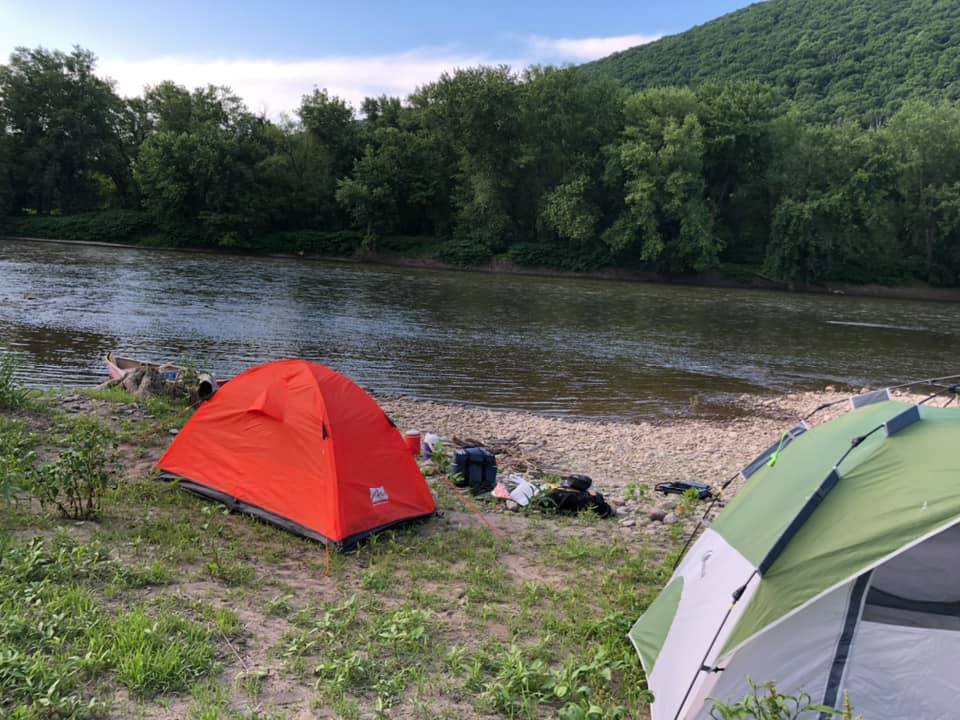
Over the years we have camped in all sorts of conditions and found, by and large, that we can manage most conditions for a night. This year we learned that what looked to be uncomfortable turned out to be quite comfortable: sleeping right on a bed of small, smooth river stones. With our camping mats, the stones became a good foundation for sleep.
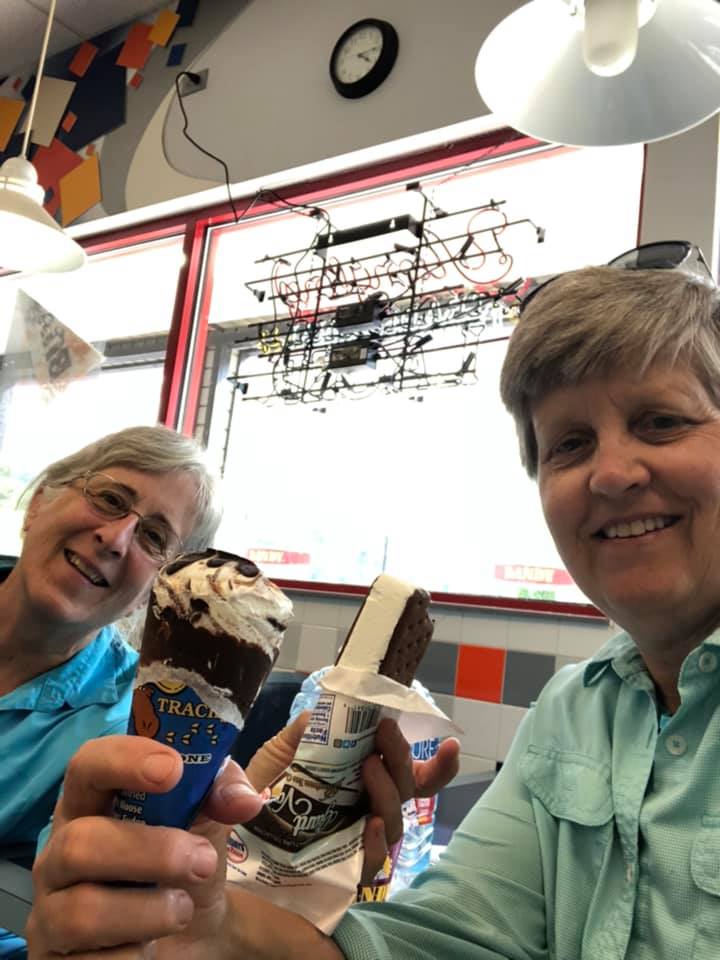
Of course, an important part of our paddling is our stops along the way to find interesting history or, in many cases, to seek out refreshment. And we were also able to charge our cell phones.
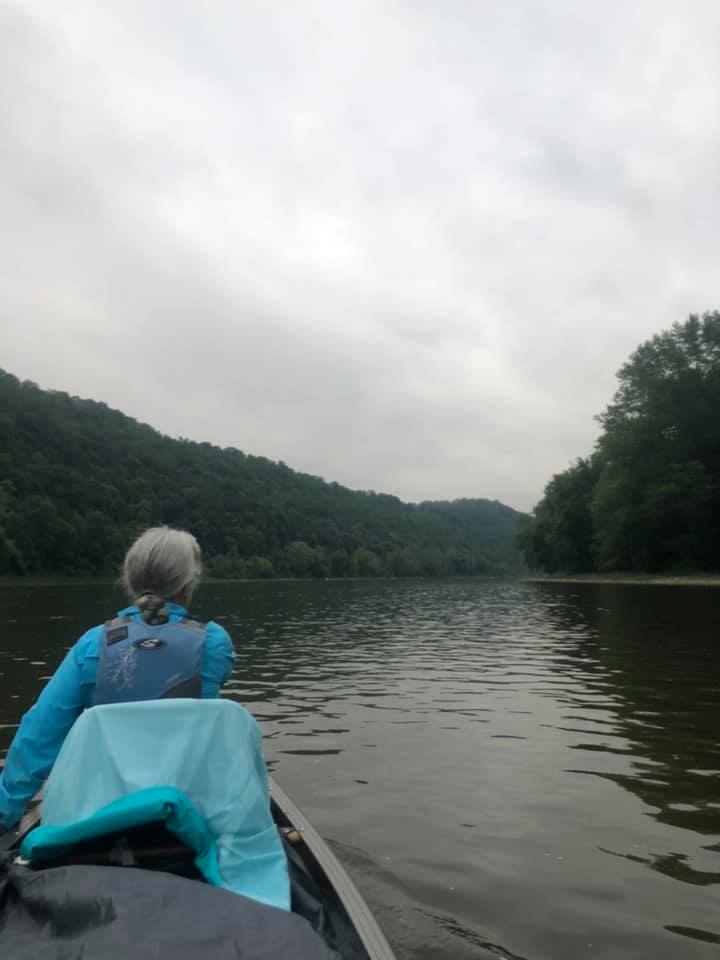
June 14: Pulled out for lunch and a nap at 12:15 and enjoyed seeing a pileated woodpecker at the PFBC Whites Ferry Access ramp at mile 211.
June 14: On the river at 6:45 am and paddled to Wilkes-Barre where we got out under the Market St Bridge at 9:20, stowing our canoe as much as possible out of site. We always wonder, when we leave the canoe by the river alone, if it will be there when we return? We strolled around Wilkes-Barre for about 2.5 hours including a stop in 2 restaurants. One was a ministry-based café called Abide where we spoke with the owner/barrister, Lafe, about the John Muir Trail. We also learned about his background and what he does there. He has created a very welcoming atmosphere and spent quite a bit of time talking to us about our journey. We learned a bit about the town and the difference ways that people pronounce it. We are still not sure what the correct way is.
We headed out of Wilkes-Barre about noon and stopped again at the Hanover Twnship Access ramp to wait out a brief shower. We also hit some rapids and Karen’s note on the map indicates that it is best to stay left of those rapids or go in the center if you want to get wet! Our river maps are helpful in warning us about coming challenges.
The night was calm.
June 15:
June 16
June 17: We saw deer and and eagle within minutes of starting out. We also say mayflies hatching from the water. It’s an amazing metamorphosis to watching them come up out of the water, unfurl their wings, let them dry, and they rise up from the water surface and fly away! When visiting towns, we could see their dead skeletons around lampposts like this one. They are quite a phenomenon along the rivers we have travelled.
Our first leg was a ten mile paddle to Danville where we were met at the ramp by a boy asking about our canoeing. It was there we also met a man who told us about the swarms of mayflies and introduced us to a young girl, perhaps 3, with an unusually thick head of long, beautiful hair. I commented to the mom on the hair at which point the man said that the girl had a great vocabulary as well. It was notable that this older man pointed out her intelligence as well as her beauty. We will remember his not so subtle reminder to praise young girls for their brains, not just their looks. He also had a vocabulary that included one of our favorite words: confluence! We have come to many confluences of rivers and creeks over the years we have paddled.
Danville was one of towns that we took some time to walk. We often comment on how we miss some interesting history when we paddle by towns, often disguised by tall flood walls. There were some beautiful buildings in town. We walked to a bakery for bagels and drinks. We met another woman on the walk back who gave us some history of the town and the big house we had seen upriver that belonged to a psychiatrist back in the day the hospital was founded and is owned by a psychiatrist again now. We were back in the river, refreshed, by 10:45 am. In retrospect, we thought it might have been good to seek out that hospital for some diagnosis for Maggie’s nerve pain and itching. Lost opportunity. Maybe next time, we will chart out any towns that have hospitals just in case!
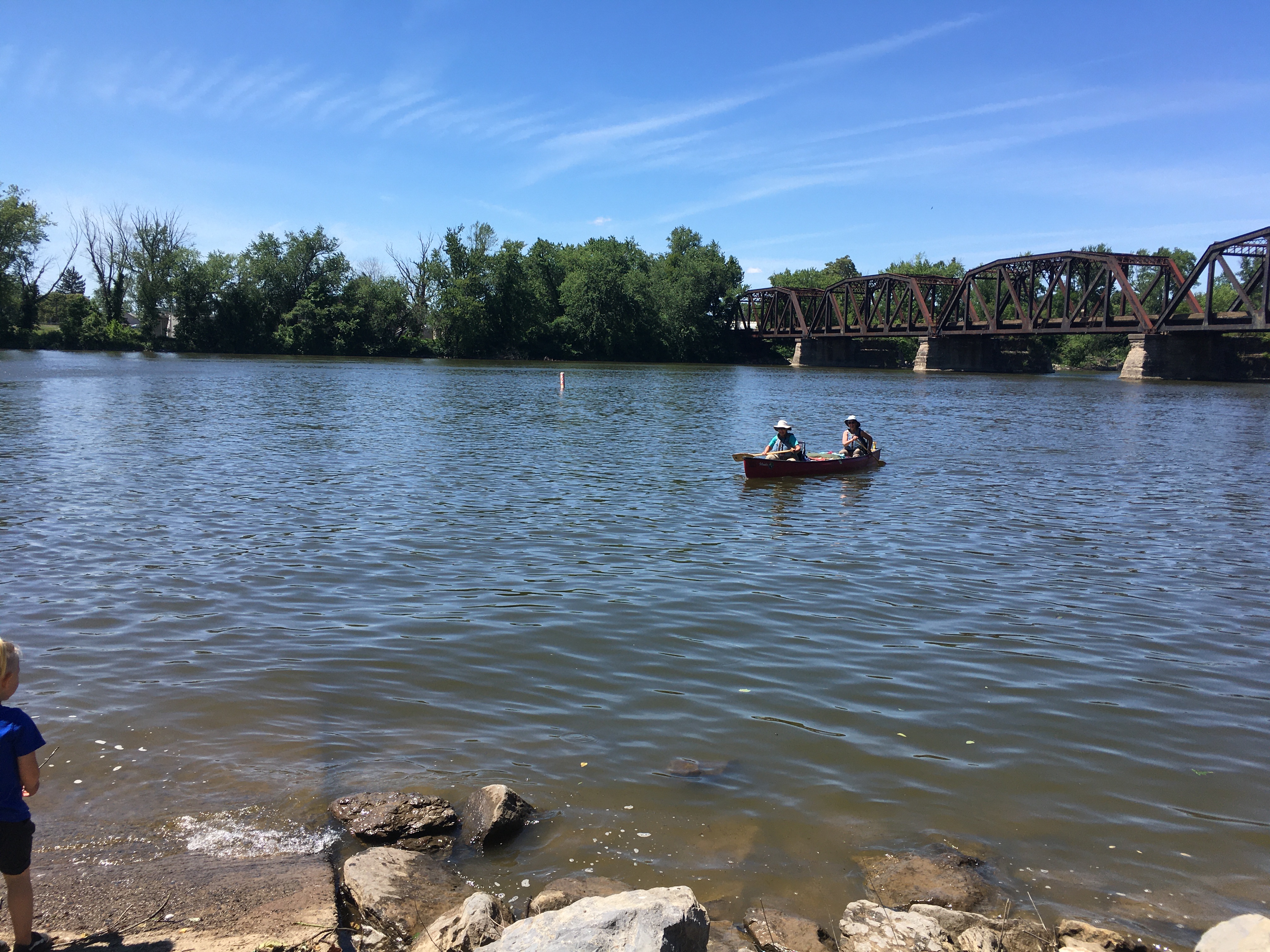
June 18: We had a leisurely paddle to our destination at Shilkellamy State Park in Sunbury, PA. It was a beautiful day. Our paddling included the required Snickers break and some shore time looking for heart stones to bring home to John. We also saw some interesting red shale or slate cliff faces along the river. We arrived at the park at 2:45 pm where Maggie’s sister, Christy Smith was waiting for us. Our directions to her had not been clear and it took a few phone calls to find that she was indeed at the right place. We are learning the canoes are not as common as kayaks and so when you say to find the canoe rental shop when they actually rent kayaks…well the folks in the neighborhood just didn’t seem to understand the difference. But there she was waving us in. Maggie’s car was where we had left it and we packed up and headed to a motel followed by Skeeter’s BBQ overlooking the river. It is always fun to have some leisure time looking out over the river we have paddled. Ice cream was searched for and found. Then to the park on the other side of the dam where we might put in next year and back to the motel for sorting of gear and debriefing, etc.
It was at the motel when Maggie took a shower in a bathroom with mirrors that she realized how bad her rash was. It took until the next day for it to dawn on Maggie and Christy that it might be shingles. Unfortunately, no medical expert was able to diagnose the condition for another three days due to the weekend so Maggie missed some critical early treatment.
But now Karen and I know that we can handle at least some sorts of medical issues while paddling. Let us hope that shingles is the worst of what either of us experiences. It is amazing to look back and realize how difficult that week was for Maggie but also to realize that being out in nature is one of the best distractions there can be.
 Paddle With Us